GEORGIAN
Six over six
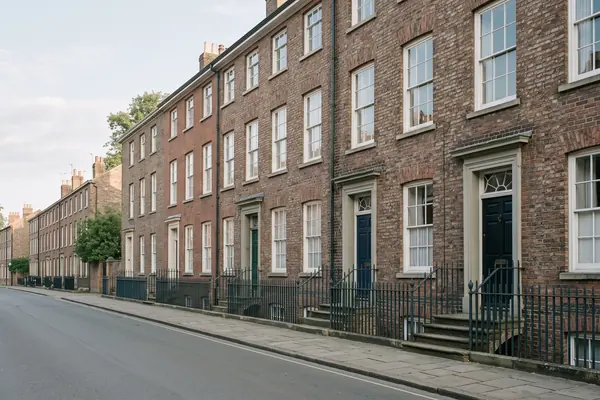
By the mid-1700s, two rows of three panes in each sash had become the norm, and glazing bars grew slimmer. By about 1800 they were very slender.
Check a window archidoodle
A HOUSE-SPOTTER'S GUIDE
Windows are the easiest clock on an old street.
Check a window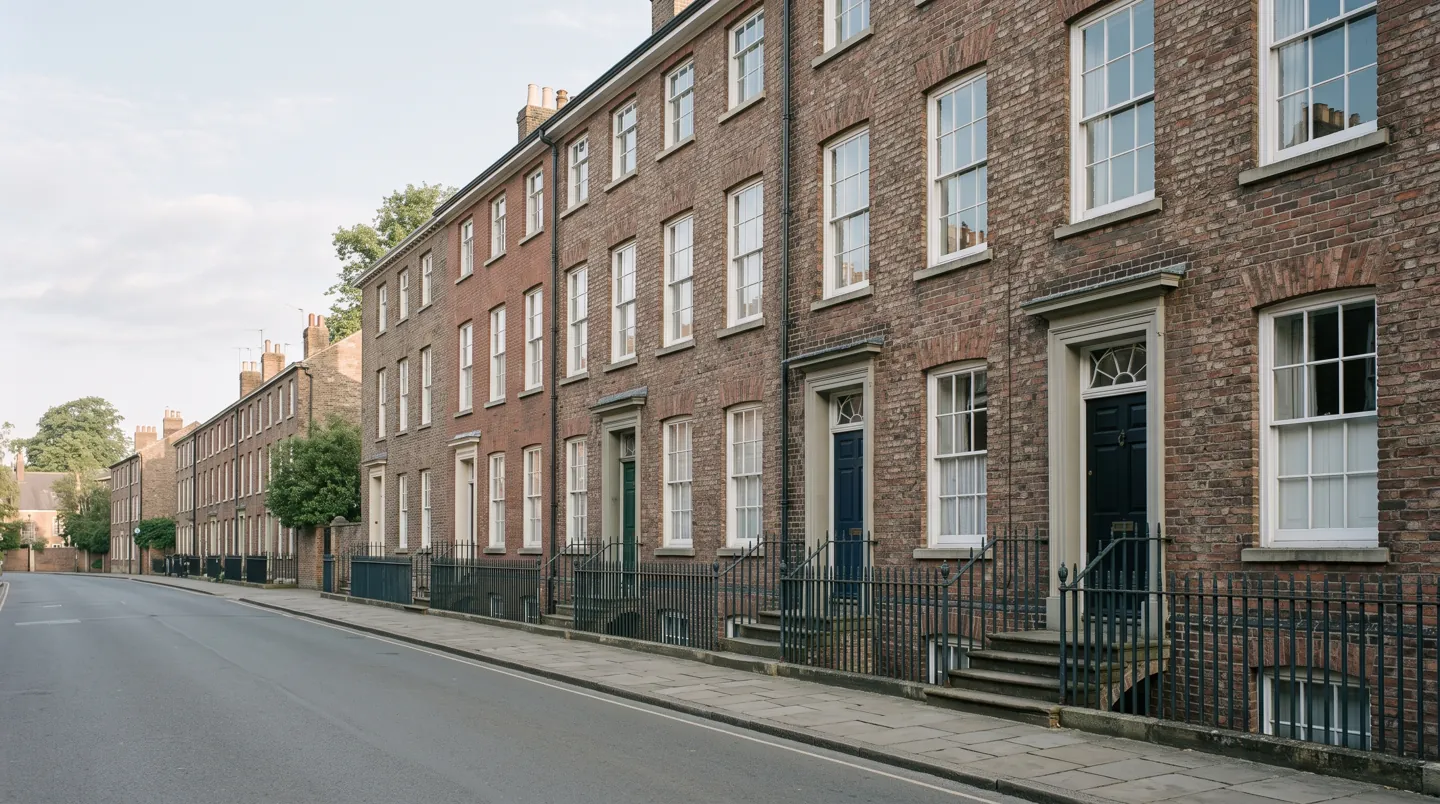
COUNTthe panes
Sash windows were the favourite British window for over 200 years, and they changed as glass got bigger and cheaper. Count the panes, look at the bars and the glass, and you can often tell which century a house front belongs to.
Updated
THE SHORT ANSWER
As glass-making improved, panes grew.
The window front tells the story.
GEORGIAN
By the mid-1700s, two rows of three panes in each sash had become the norm, and glazing bars grew slimmer. By about 1800 they were very slender.
Check a windowTHE GLASS
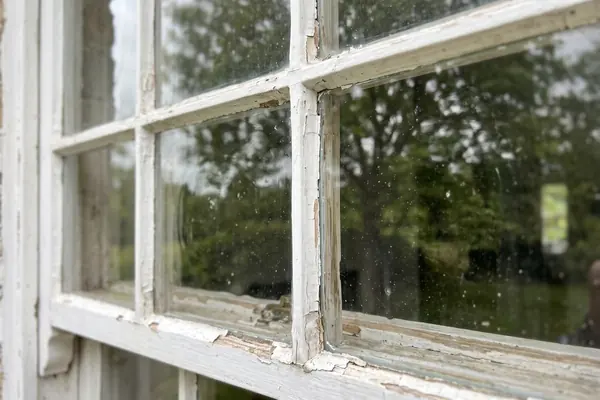
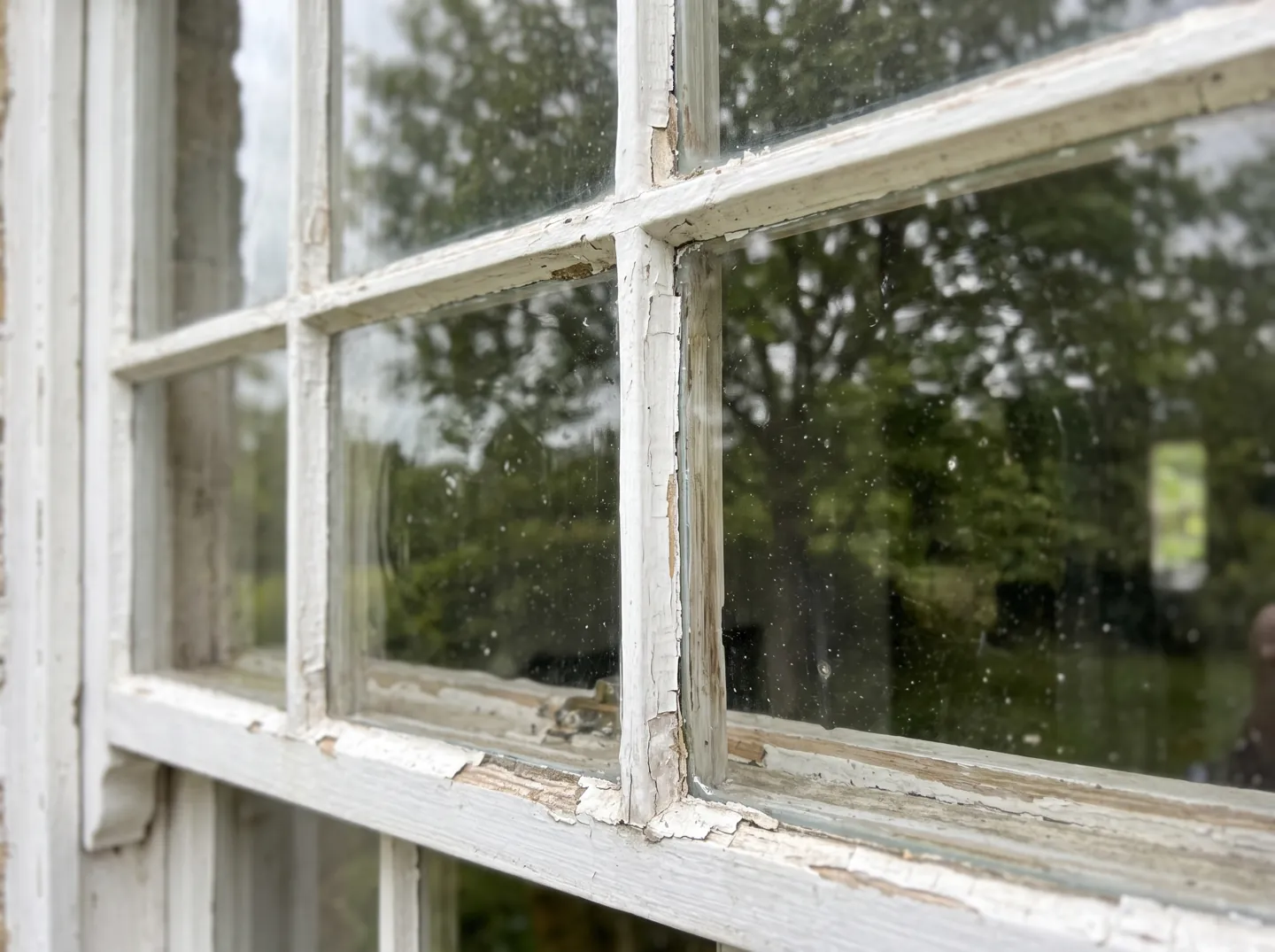
Early 18th-century crown glass was spun into a disc. It can hold tiny bubbles and curved ripples, and only small panes could be cut from it.
About old glassVICTORIAN
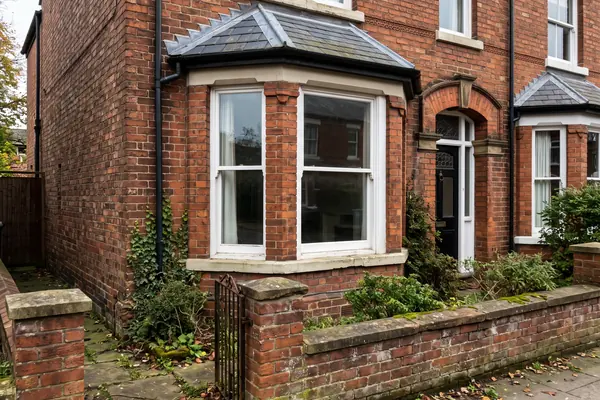
From the mid-1800s larger plate glass arrived. Sashes with one pane each spread, and small 'horns' appeared to strengthen the joints.
See the numbersA QUICK WINDOW CHECK
Pick the window type you can see from the street. The bar shows roughly how old that style is: the longer the bar, the older.
Windows are often replaced, so treat this as a clue, not proof. Census records, old maps and local archives can confirm a date.
TWO NUMBERS WORTH KNOWING
From the English Housing Survey's
profile of the 2013 housing stock.
35%
Terraced homes built before 1919
The English Housing Survey counted 23.3 million homes in England in 2013. Terraces had the highest share built before 1919, at 35%, while 59% of semi-detached homes were built between 1919 and 1964.
TERRACED HOMES · ENGLAND
54%
London homes built before 1945
London's homes were older than the rest of the country: 54% were built before 1945, compared with 34% of homes outside the capital.
LONDON · ENGLAND
Source: English Housing Survey, Profile of English housing 2013, Chapter 1: Stock profile (Department for Communities and Local Government).
FOUR THINGS TO LOOK FOR
You need nothing but your eyes. Look at a row of houses together, because a single replaced window can mislead you.
Many small panes per sash suggest the 1700s; one large pane per sash suggests the mid-1800s or later.
Small horns sticking down at the sides of the top sash first appeared on Victorian sashes with big panes.
Old glass has slight ripples that bend reflections. Modern float glass is perfectly flat.
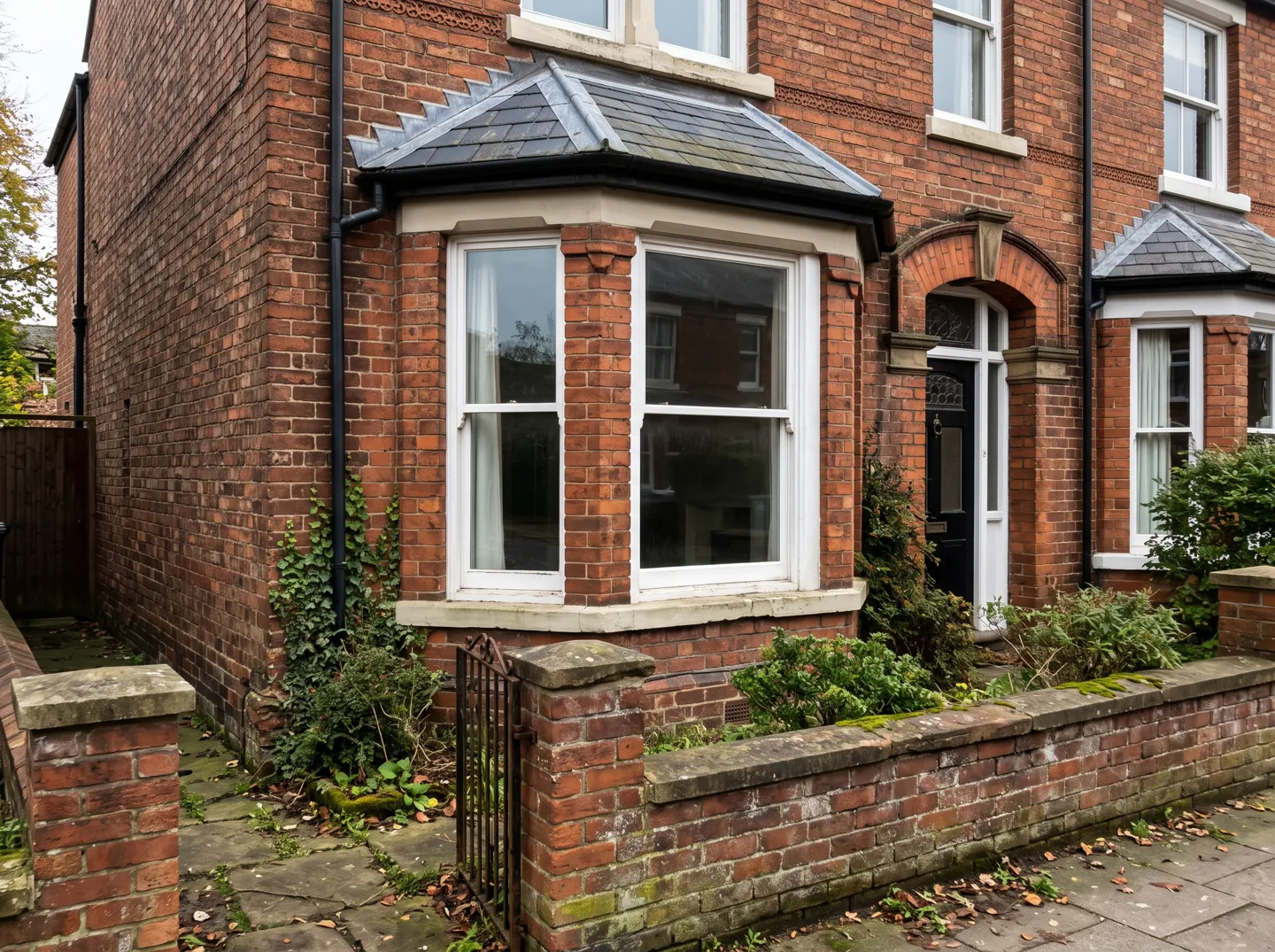
Georgian fronts tend to be symmetrical; Victorian houses often add bay windows and patterned brick; Edwardian ones may show porches, tile-hanging or pebbledash.
BLIND WINDOWS AND THE WINDOW TAX
England's window tax began in 1696 and lasted until 1851. Rates were raised in 1784 and tripled in 1797, and some householders blocked up windows to pay less.
But Lancaster City Council's sash window guidance warns not to assume every blind window was a tax dodge. More often a blank opening kept the rhythm of a façade where a real window could not go, such as in front of an internal wall.
Questions
Lancaster City Council's guidance says their first use in England is thought to have been at the Palace of Whitehall around 1670, and they stayed the most popular window type for over 200 years.
Small projections at the bottom corners of the top sash. They began to appear from the mid-1800s to strengthen the joints of sashes holding larger, heavier panes, and Edwardian sashes often used them for looks.
Often, yes. Crown glass from the 18th century can contain tiny bubbles and curved ripples, while most modern glass is made by the float process and is perfectly flat and very reflective.
They are a good clue but not proof, because windows are often replaced. To confirm a date, look for the first census mention of the address, historic Ordnance Survey maps, or local and county archives.
Lancaster City Council's guidance says listed building consent is needed to replace or alter the appearance of any windows in a listed building, and conservation areas may have extra controls. Ask your local council's planning team.
ABOUT THIS NAME
archidoodle.com is part of the DoodleSale portfolio. It isn't in an auction right now, but you can ask about leasing it.